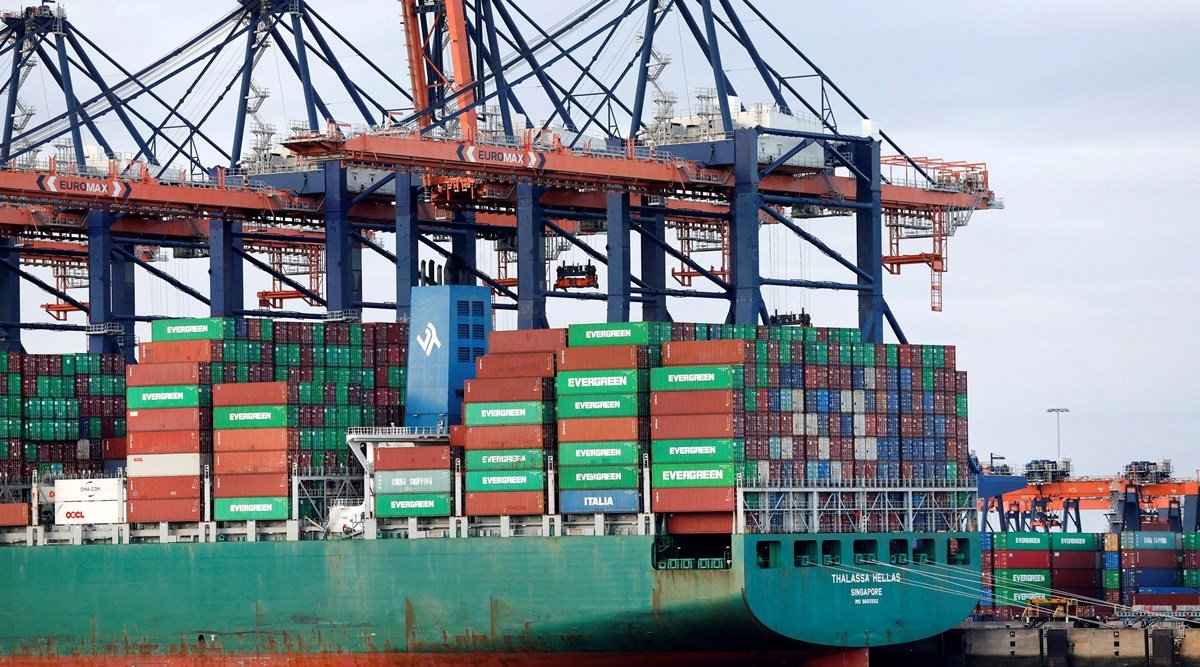
The Dutch economy is defying expectations, proving its mettle in a turbulent global landscape. Far from succumbing to international trade tensions, the Netherlands surprised analysts by posting robust growth, significantly outperforming earlier forecasts. This resilience isn't just a fleeting moment; it's rooted in strong domestic spending and a powerful export engine, painting a picture of a dynamic economy adept at navigating challenges.
For anyone looking to understand the forces shaping one of Europe's most influential economies, or considering engaging with its vibrant business environment, this guide offers an in-depth, human-first exploration.
At a Glance: Key Takeaways from the Dutch Economic Surge
- Surprising Growth: The Dutch economy expanded by a stronger-than-expected 1.9% in 2025, exceeding initial forecasts.
- Dual Drivers: This growth was primarily fueled by robust exports and solid spending by both households and the government.
- Export Powerhouse: Petroleum products, machinery, and transport equipment led a significant rise in exports, buoyed by strategic pre-tariff imports by companies.
- Domestic Strength: Higher wages (up 5.3% in 2025) boosted household consumption, while increased government spending (especially on healthcare) also contributed.
- Investment Lag: Investment remains the weakest link, showing a slight decline in Q4 2025, although full-year investment was still positive.
- Inflationary Pressures: While falling, Dutch inflation (3.0% in 2025, projected 2.4% in 2026) remains higher than the Euro area average, driven by strong domestic demand.
- Tight Labor Market: Wage growth is significant, but the labor market pressure is easing slightly, with fewer vacancies per unemployed person.
- Housing Affordability: House prices continue to rise, making homeownership less accessible for a growing number of households.
- Budgetary Watch: The budget deficit is projected to near the 3% threshold by 2026, raising concerns about future public spending and the impact of an aging population.
The Resilience Story: Outperforming Expectations
In an economic narrative often dominated by cautious forecasts and geopolitical anxieties, the Dutch economy delivered a refreshing plot twist. Provisional figures reveal that the Netherlands' Gross Domestic Product (GDP) grew by a robust 1.9% in 2025. This wasn't just good news; it was a significant overperformance, comfortably exceeding the central bank's (DNB) earlier forecast of 1.7%, which itself had been an upward revision.
Economists had widely anticipated a more severe impact from international trade tensions, particularly those emanating from the US. Yet, the Dutch economic engine, known for its open and globally connected nature, proved surprisingly resilient. In fact, this 2025 growth figure aligns closely with the long-term average of approximately 2% per year over the past three decades, suggesting that despite external pressures, the underlying strengths of the Dutch economy remain intact. Looking at the finer details, the fourth quarter of 2025 saw a respectable 0.5% rise in GDP compared with the previous quarter, signaling consistent momentum as the year drew to a close.
Why the Upward Revision? Less Friction Than Feared
One of the key reasons behind the upward revision and the subsequent outperformance was the less-than-expected drag from international trade tensions. While tariffs were a concern, companies adapted, sometimes even pushing imports forward to get ahead of the new duties. This strategic maneuvering inadvertently boosted Dutch exports in 2025, creating a temporary uplift that analysts hadn't fully factored in. It’s a testament to the adaptability of Dutch businesses that they could navigate such a complex global trade environment with relative success.
Engines of Growth: What's Driving the Momentum?
Understanding the Dutch economic success story means looking beneath the headline numbers to the fundamental drivers. The recent growth wasn't a fluke; it was powered by a combination of strong external trade and confident internal consumption.
Trade Titans: Exports Lead the Charge
The Netherlands has long been a global trading hub, and its latest economic performance reiterates this crucial identity. Exports surged by 1.3% in the final three months of 2025, according to CBS data, making the trade balance the largest single contributor to growth in that quarter. This isn't just about volume; it's about what the Netherlands is exporting. Key categories that saw higher sales included petroleum products, machinery, and transport equipment.
Behind these numbers lies a story of advanced manufacturing and global supply chain integration. Experts like ABN Amro economist Jan-Paul van de Kerke point to stronger growth in Germany, a key trading partner, and a particularly good year for the machinery sector, with chipmaker ASML playing a central, pivotal role. ASML, a world leader in lithography equipment, is a prime example of Dutch innovation driving global technological progress and, consequently, significant export revenue. While imports also rose by 0.6% in the same period, the larger increase in exports underscores the country's competitive edge in key industrial segments.
Household Power: Spending with Confidence
Beyond the export figures, the domestic economy proved to be a robust pillar of growth. Households in the Netherlands are spending more, and there's a clear reason why: wages are rising. In 2025, wage growth hit an impressive 5.3%, significantly increasing disposable income for many families. This directly translates into higher consumption, with household spending rising by 0.3% quarter-on-quarter, even after adjusting for inflation.
Much of this increased spending was directed towards essential goods like food, indicating a broad-based improvement in consumer sentiment and purchasing power. When people have more money in their pockets, they tend to spend it, injecting vitality into various sectors of the economy, from retail to services. The DNB anticipates that this higher wage growth will gradually ease in the coming years, but its impact on 2025's strong performance was undeniable. This enhanced purchasing power doesn't just fuel immediate spending; it also allows households to save more, potentially for significant investments like paying off mortgage loans or buying a home.
Government's Role: Strategic Investments and Services
The government also played a significant role in fueling economic expansion. Public spending rose by 1.1%, primarily driven by increased expenditure on healthcare and higher wage costs for public sector employees. In a modern economy, government spending isn't just about administrative overhead; it's about investing in the well-being of the population and maintaining essential services.
Healthcare, in particular, is a sector that often sees increasing demand and costs, reflecting both an aging population and advancements in medical care. This public investment, while contributing positively to GDP growth, also has broader implications for resource allocation and the national budget, which we'll explore shortly. The government's willingness to invest in its people and infrastructure provides a stable foundation, complementing the dynamism of the private sector. Learn more about NLD.
The Investment Puzzle: A Mixed Picture
While exports, household spending, and government outlays painted a picture of economic strength, investment offered a more nuanced view. In the fourth quarter of 2025, investments fell by 0.1% compared to the previous quarter, marking a second consecutive quarterly decline. This slowdown suggests a degree of caution or perhaps a pause in major capital expenditures by businesses.
However, it's crucial to look at the full-year perspective. Despite the late-year dip, total investment for 2025 was still 0.5% higher than in 2024. This indicates that while there might be some short-term headwinds or adjustments, the overall trend for the year remained positive. Factors like interest rates, global economic uncertainty, and specific sector performance can influence investment decisions, and this area will be a key one to watch for future economic health. Sustained investment in innovation, infrastructure, and business expansion is vital for long-term productivity gains and competitiveness.
Navigating the Headwinds: Key Economic Challenges
Despite its impressive performance, the Dutch economy isn't without its challenges. Like any complex system, it faces specific pressures that require careful management and strategic foresight.
Inflation's Sticky Grip
One of the most persistent concerns is inflation. While projected to decrease from 3.0% in 2025 to 2.4% in 2026 and 2.3% in 2027, it remains stubbornly higher than the Euro area average. The DNB points to a primary culprit: homegrown demand. Domestic demand for products and services is running up against the limits of production capacity. Simply put, there's strong demand for goods and workers within the Netherlands, and this pushes up both prices and wages.
This scenario creates a delicate balancing act for policymakers. While strong demand indicates economic vibrancy, unchecked inflation can erode purchasing power and introduce instability. Understanding the domestic drivers of inflation is key to implementing effective countermeasures that don't stifle overall growth.
The Tight Labor Market
Closely linked to inflation is the state of the labor market. The Netherlands has been grappling with a remarkably tight labor market, where job vacancies often outnumber available workers. This scarcity drives up wages, which, as mentioned, contributes to higher household spending but also feeds into inflationary pressures.
The good news is that pressure on the labor market has begun to ease slightly. There are now 93 vacancies for every 100 unemployed people, a noticeable improvement from the peak of 142 vacancies in 2022. This easing suggests that some of the intense competition for talent may be abating, though it remains a significant factor in wage growth and overall economic dynamics. For businesses, this means the challenge of attracting and retaining skilled labor remains, even if it's slightly less acute than in previous years.
Housing Affordability: A Growing Concern
The housing market in the Netherlands continues to be a hot topic, though perhaps not in the way many hope. While house price increases are projected to slow to around 4% in 2026 and 2027 (down from over 8% in recent years), housing remains expensive. Crucially, house prices continue to rise faster than household income and the amount people can borrow.
This widening gap means that owner-occupied homes are becoming less affordable. By 2027, it's estimated that only one in three households will have sufficient income to finance a median home with a mortgage loan, a stark contrast to nearly half of households in 2019. This trend necessitates that more households rely on extra savings, greater home equity, or financial support from family to enter the housing market, creating significant social and economic implications for younger generations and first-time buyers.
Budgetary Balancing Act
Public spending, while a positive contributor to economic growth, also adds to demand for goods, services, and labor, contributing to the higher inflation figures. The budget deficit is projected to reach 2.9% in 2026, putting it precariously close to the 3% threshold, which is an important fiscal benchmark in the Eurozone.
This situation presents a clear challenge for the government. On one hand, public investment is vital for societal well-being and economic stability. On the other, the Netherlands faces significant future expenditure due to an aging population, which will require greater spending on healthcare and state pensions. Simultaneously, revenues from payroll taxes are projected to fall as fewer people are in the workforce. This means any new expenditure, including public investments, must be structurally covered to ensure long-term fiscal sustainability.
A Look Ahead: Projections and Sustainability
The DNB's Autumn Projections, published in December 2025, offer a glimpse into the anticipated future trajectory of the Dutch economy. While 2025 saw surprising strength, a slowdown is expected in the immediate years ahead. GDP growth is projected to decelerate to 1.2% in 2026 and 1.1% in 2027. This anticipated moderation reflects several factors: the temporary boost from companies bringing imports forward is not expected to continue, and the easing wage growth, while positive for inflation control, may temper household spending slightly.
The long-term sustainability of the Dutch economy hinges on its ability to address the structural issues highlighted. Managing inflation while maintaining growth, ensuring housing affordability, and structurally covering increasing public expenditure due to demographic shifts will be crucial. The Dutch economy's inherent openness means it will always be susceptible to global economic fluctuations, but its strong foundation in innovation, trade, and a skilled workforce provides a robust platform for future success.
What This Means for You: Opportunities and Considerations
For businesses, investors, or individuals looking at the Dutch market, these economic trends offer both opportunities and areas for strategic consideration.
Tapping into Key Sectors
The continued strength in exports, particularly in machinery and high-tech sectors like chip manufacturing (e.g., ASML), signals ongoing opportunities. Companies involved in advanced manufacturing, logistics, and innovation will likely find a fertile ground. The government's significant spending on healthcare also points to a stable, growing market for healthcare providers, equipment manufacturers, and related services. Understanding the nuances of these sectors and how they contribute to the broader economy is vital for strategic positioning.
Understanding Market Dynamics
The robust household spending, driven by wage growth, indicates a healthy consumer market. Businesses focused on consumer goods, services, and even real estate (despite affordability challenges) can benefit from this spending power. However, be mindful of the "sticky" inflation. Pricing strategies need to account for higher domestic demand and potential production capacity limits.
Strategic Planning in a Changing Landscape
The easing labor market pressure, while slight, could offer some relief for companies struggling with talent acquisition. However, competitive wages and employee retention will remain critical. For individuals, particularly those considering homeownership, understanding the affordability challenges and planning for higher savings or alternative financing strategies is essential. Businesses looking to invest should consider the mixed signals on capital expenditure and plan for long-term growth rather than short-term gains, especially given the anticipated slowdown in overall GDP growth post-2025.
Beyond the Numbers: The Dutch Edge
What truly sets the Dutch economy apart, beyond its latest performance metrics, is a blend of inherent characteristics. It's an economy built on innovation, with a strong focus on research and development, particularly in areas like high-tech systems, agri-food, and renewable energy. Its open nature fosters international trade and investment, making it a gateway to Europe. Coupled with a stable political and regulatory environment, a highly educated workforce, and excellent infrastructure, these factors provide a robust and attractive ecosystem for business and talent. The commitment to sustainability and digital transformation further positions the Netherlands at the forefront of future economic trends.
Capitalizing on Dutch Dynamics: Moving Forward
The Dutch economy’s ability to outperform forecasts in a challenging global climate is a testament to its fundamental strengths: a powerful export engine, resilient domestic consumption, and adaptable businesses. While challenges like inflation, housing affordability, and budgetary pressures demand careful attention, the underlying dynamism and strategic investments ensure a strong foundation.
For those engaging with the Netherlands, the path forward involves recognizing both the opportunities in its leading sectors and the nuances of its domestic economy. By understanding these intertwined forces, you can better navigate this vibrant market, capitalize on its strengths, and contribute to its continued success. The story of the Dutch economy is one of enduring resilience, strategic adaptability, and a forward-looking approach that promises continued relevance on the global stage.