When you think of the Netherlands, images of picturesque canals, innovative design, and a global outlook often come to mind. This progressive spirit extends to the Education System Netherlands, a robust and dynamic framework designed to foster well-rounded individuals ready for a complex world. From a young age, Dutch children are immersed in a system that balances academic rigor with practical skills, increasingly incorporating bilingual learning to prepare them for an international future.
This guide will walk you through the ins and outs of Dutch education, giving you the clarity and confidence to understand its structure, strengths, and unique characteristics. Whether you're a parent considering relocation, an international student eyeing Dutch universities, or simply curious, you'll find everything you need to navigate this fascinating system.
At a Glance: Key Facts About the Dutch Education System
- Compulsory Education: Ages 5 to 16, though most children start primary school at age 4. Partial compulsory education extends to age 18 or until a diploma is obtained.
- Primary Language: Predominantly Dutch, but English is gaining prominence, especially in pilot bilingual primary schools and specialized secondary programs.
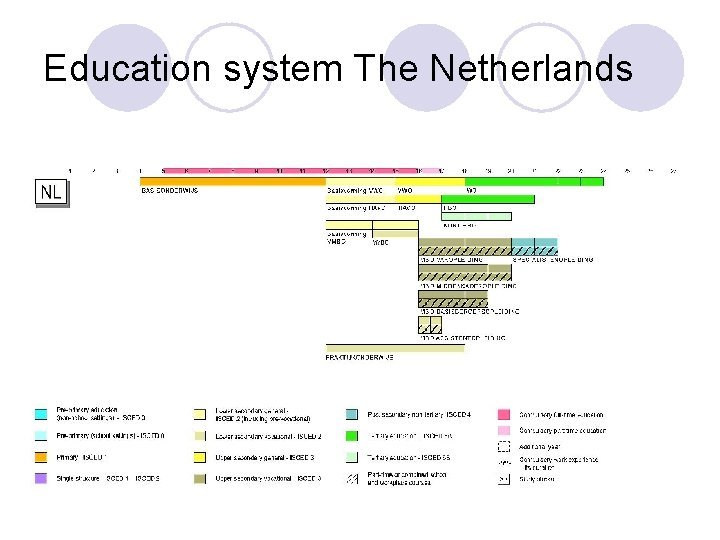
- Structure: Divided into primary (8 years), secondary (3 main levels, 4-6 years), vocational (MBO, 1-4 years), and higher education (HBO/WO).
- Funding: Most schools (public, special/religious, general-special/neutral) are government-funded and officially free, with optional parental contributions. Private schools are rare.
- Oversight: Coordinated by the Ministry of Education, Culture and Science, and supervised by the Inspectie van het Onderwijs.
- Grading Scale: 1 (very poor) to 10 (outstanding).
- International Standing: Ranked 16th globally by PISA in 2018, though scores in core subjects have seen a decline since 2006.
- Current Challenges: The system faces an ongoing teacher shortage.
The Foundation: Compulsory Education in the Netherlands (Leerplicht)
Education in the Netherlands isn't just an option; it's a fundamental right and a legal obligation. The Dutch concept of leerplicht, or compulsory education, ensures that all children receive a proper schooling. This obligation kicks in at age 5 and continues until their 16th birthday. Interestingly, while compulsory from age 5 (Group 2), the vast majority of Dutch children begin primary school a year earlier, at age 4 (Group 1), making for a smooth transition into formal learning.
Beyond 16, a system called partiële leerplicht (partial compulsory education) applies. This means that if a young person hasn't yet earned a VWO, HAVO, or MBO-2 diploma, they must attend some form of education for at least two days a week until they turn 18 or achieve one of these qualifications. This commitment to continuous learning underscores the Dutch belief in equipping every individual with the skills they need for life and work.
How Dutch Schools are Funded and Monitored
One of the cornerstones of the Dutch Education System Netherlands is its commitment to broad access. The vast majority of schools—whether they are public (openbaar), special (bijzonder, often with a religious or philosophical foundation), or general-special (algemeen bijzonder, offering a neutral approach but still privately managed)—are fully government-financed. This means that, officially, schooling is free.
However, you might encounter requests for a "parental contribution" (ouderbijdrage). This fee is voluntary and helps cover additional costs like school trips, extracurricular activities, or special equipment that enhance the school experience. While voluntary, it's a common practice. Private schools, which are quite rare, operate entirely on their own funds, typically charging substantial tuition fees.
Regardless of their specific character or funding model, all schools in the Netherlands operate under the watchful eye of the Inspectie van het Onderwijs (Inspection of Education). This independent body ensures that educational standards are met, quality is maintained, and schools comply with regulations, providing a layer of trust and accountability across the entire system.
Primary School (Basisschool): Laying the Groundwork
The journey through the Dutch Education System Netherlands begins in the basisschool, or elementary school. Children typically attend from ages 4 to 12, progressing through 8 groups (groep 1-8). As mentioned, while compulsory from Group 2 (age 5), most children start in Group 1 at age 4, easing into the school environment through play-based learning.
Formal instruction in reading, writing, and arithmetic generally starts in Group 3, when children are around 6 years old. This structured approach builds foundational skills progressively. You'll also notice an increasing emphasis on English: while traditionally taught in Groups 7 and 8, many schools are now introducing English earlier, even from Group 1.
The Rise of Bilingual Primary Schools
A fascinating development in Dutch primary education is the pilot program for bilingual primary schools. Currently, 17 schools are experimenting with teaching 30% to 50% of the day in English, starting right from age 4. This initiative reflects a growing recognition of the importance of English proficiency in an increasingly globalized world, preparing students not just for Dutch society but also for international engagement.
Assessment and Progression
Towards the end of primary school, in Group 8, most children take an aptitude test like the Cito Eindtoets Basisonderwijs. This test, alongside the crucial recommendation from the primary school teacher and the input from parents and the pupil themselves, guides the decision on which type of secondary education will best suit the child. This multi-faceted approach aims to find the optimal learning path, though it's not without its critics (more on that later).
Grade progression in Dutch primary schools is generally fluid. Retaking a year (blijven zitten) isn't uncommon if a child needs more time to grasp key concepts, ensuring they have a solid foundation before moving on. Skipping a year, while possible, is much rarer.
Navigating Secondary Education (Voortgezet Onderwijs): Diverse Paths Emerge
At age 12, after primary school, Dutch students embark on voortgezet onderwijs, or secondary education. This is where the system truly diversifies, guiding students toward different academic and professional pathways based on their aptitudes and aspirations. The first year, known as the brugklas (bridge class), is common to all secondary levels, allowing a period of adjustment and often providing an opportunity for schools to further assess students before solidifying their path.
There are three main types of secondary education:
- Preparatory Vocational Secondary Education (VMBO): Lasting 4 years (ages 12-16), VMBO combines vocational training with theoretical education. This is the most popular choice, with about 60% of Dutch students enrolling here. VMBO itself has various levels, from the more theoretical Theoretische leerweg (TL) and Gemengde leerweg (GL), to the more practically oriented Kaderberoepsgerichte leerweg (KBL) and Basisberoepsgerichte leerweg (BBL). There's also Praktijkonderwijs for students who benefit most from hands-on learning, leading directly to the job market. Students with educational or behavioral challenges may receive Leerwegondersteunend onderwijs (learning support) within VMBO.
- Senior General Secondary Education (HAVO): A 5-year program (ages 12-17), HAVO prepares students for Hoger Beroepsonderwijs (HBO), or Higher Professional Education, which are universities of applied sciences.
- University Preparatory Education (VWO): The most academically rigorous path, VWO lasts 6 years (ages 12-18) and is designed to prepare students for Wetenschappelijk Onderwijs (WO), or research universities. VWO offers two streams: Atheneum and Gymnasium, with the latter including compulsory Latin and Greek. For those seeking an even more internationally focused path, Bilingual VWO (TVWO) offers a curriculum where the majority of lessons are taught in English.
Mobility Between Levels
A key feature of the Dutch system is its flexibility. It's often possible for students to move between levels – for example, from VMBO to HAVO, or HAVO to VWO – if they demonstrate sufficient academic ability and achieve specific grade averages. This mobility ensures that a child's initial placement isn't a rigid, lifelong sentence, allowing for growth and re-evaluation. Conversely, students can also be demoted to a lower level if they struggle to keep up.
Curriculum: From Broad Foundations to Specialization
The first three years of secondary education across all levels (VMBO, HAVO, VWO) are known as the basisvorming. During this phase, students follow a common curriculum covering a wide range of subjects. This ensures a broad general education before specialization begins.
In the final two (HAVO) or three (VWO) years, known as the tweede fase, students differentiate their studies by choosing one of four "profiles" (profielen):
- Cultuur en Maatschappij (C&M): Focuses on arts, foreign languages, and humanities.
- Economie en Maatschappij (E&M): Emphasizes social sciences and economics.
- Natuur en Gezondheid (N&G): Covers biology and natural sciences, often a prerequisite for medical training.
- Natuur en Techniek (N&T): Concentrates on natural sciences and technology, necessary for technological fields.
This profile system allows students to tailor their studies to their interests and future career aspirations, providing a strong foundation for higher education.
VAVO: Education for Adults
For adults who wish to obtain a VMBO, HAVO, or VWO diploma, or simply individual subject-specific certificates, there's Voortgezet algemeen volwassenen onderwijs (VAVO). This pathway provides a second chance or an opportunity for lifelong learners to achieve their educational goals.
MBO: The Gateway to Skilled Professions
Following VMBO, or sometimes even HAVO, many students enter Middelbaar beroepsonderwijs (MBO), which is vocational training roughly equivalent to junior college education. MBO programs typically last between 1 to 4 years, depending on the chosen level:
- Level 1 (Assistant training): Shortest programs (max 1 year), designed for simple tasks and basic entry-level roles.
- Level 2 (Basic vocational education): 2-3 years, preparing students for executive tasks in a specific profession.
- Level 3 (Full professional training): 3-4 years, enabling students to perform independent tasks within their field.
- Level 4 (Middle Management VET): The highest MBO level, lasting 3-4 years, offering higher responsibility and, crucially, opening doors to higher education (HBO).
MBO offers two main pathways: - School-based (BOL): This pathway is primarily classroom-based, with 20-59% of the training taking place at a company through internships or practical work.
- Work-based (BBL): This is a more hands-on approach, with over 60% of the training occurring directly at a recognized training company, combined with part-time schooling.
Both BOL and BBL pathways require significant Work Based Learning (WBL) and lead to the same official certification, highlighting the practical orientation of MBO. These programs are primarily offered by around 70 colleges, including the larger Regionale Opleidingencentra (ROCs), which are regional training centers.
Higher Education: Academic and Applied Pathways
The Dutch higher education system has fully embraced the three-cycle (Bachelor's, Master's, PhD) Bologna process structure since 2002, ensuring international compatibility. The European Credit Transfer and Accumulation System (ECTS) is used, with 60 credits representing one year of full-time study (equivalent to approximately 28 hours of work per credit).
There are two main types of higher education, each with a distinct focus:
- Higher Professional Education (HBO): Offered by hogescholen (Universities of Applied Sciences). These institutions are renowned for their practical, profession-oriented approach, preparing students directly for specific careers.
- Bachelor's: Typically 240 ECTS (4 years). Graduates earn titles like BA (Bachelor of Arts), LLB (Bachelor of Laws), BSc (Bachelor of Science), or specific field-related titles.
- Master's: Generally 60-120 ECTS, often building on the professional focus of the Bachelor's.
- Research-oriented Education (WO): Provided by universiteiten (Research Universities). These institutions focus on theoretical aspects, critical thinking, and independent research, pushing the boundaries of knowledge.
- Bachelor's: 180 ECTS (3 years). Graduates receive BA, LLB, or BSc titles.
- Master's: Ranging from 60 to 180 ECTS (1-3 years), depending on the discipline. Graduates earn MA (Master of Arts), LLM (Master of Laws), MSc (Master of Science), or MPhil (Master of Philosophy).
- PhD: The pinnacle of academic achievement, awarded upon the successful completion and defense of a doctoral thesis. A PhD in the Netherlands is primarily a research degree, requiring a Master's as a prerequisite.
Admission to Dutch Higher Education: What You Need to Know
Gaining entry to a Dutch higher education institution requires meeting specific qualifications, which vary depending on the type of program you're pursuing.
- For an HBO Bachelor's degree: You'll typically need a minimum HAVO diploma or an MBO level 4 diploma.
- For a WO Bachelor's degree: A VWO diploma is usually required. Alternatively, if you've completed the first year (60 ECTS, known as the propaedeuse) of an HBO program, you may also qualify, sometimes with additional VWO subject certificates.
- For a Master's degree: A relevant Bachelor's degree is the standard requirement. For HBO Bachelor's graduates aspiring to a WO Master's, additional requirements or completion of a pre-master program may be necessary to bridge any academic gaps.
Special Requirements and Numerus Fixus
Certain programs, particularly in fields like art or medical sciences, have additional skill requirements (e.g., entrance exams, portfolios). Highly popular programs might also have a numerus fixus – a maximum number of students allowed. Admission to these programs is often allocated via a weighted lottery or a selection procedure that considers grades, motivation, and extracurriculars.
Mature Applicants
The Dutch system is inclusive of mature applicants. If you're over 21 and don't possess the standard qualifications, you can often gain entry to higher education by passing an entrance examination and undergoing an assessment. This demonstrates the system's commitment to lifelong learning and opportunity.
For a deeper dive into moving to the Netherlands, exploring its culture, and broader insights, refer to Our comprehensive NLD guide.
Understanding Tuition Fees (2025–2026)
Tuition fees in the Netherlands are structured differently for students from the EU/EEA/Switzerland versus those from outside this region.
- For EU/EEA/Switzerland students: The statutory tuition fee is approximately €2,601 per year for most full-time bachelor's and master's programs at government-funded institutions. This fee is relatively uniform across public universities.
- For Non-EU/EEA International students: Institutional tuition fees apply, which are significantly higher. These can range from €10,000 to €18,000 per year for bachelor's degrees and €12,000 to €30,000 per year for master's degrees. The exact amount varies by institution and program.
It's always advisable to check the specific university's website for the most current and precise tuition fee information.
Ensuring Quality: Accreditation and Oversight
The quality of higher education in the Netherlands is rigorously maintained through a robust accreditation system. The Accreditation Organization of the Netherlands and Flanders (NVAO) plays a pivotal role here. The NVAO accredits degree programs for a period of six years, based on a set of stringent, established criteria.
Only accredited programs are eligible for government funding, allow students to access financial aid, and issue legally recognized degrees. This means that when you choose a program in the Netherlands, you can be confident in its quality and international recognition. All accredited programs are listed in the Central Register of Higher Education Study Programmes (CROHO), providing transparency and easy verification for students and employers alike.
Practical Considerations for International Students and Families
If you're considering the Education System Netherlands for your family or your own studies, here are some actionable insights:
- Bilingual Schools and Language: While bilingual primary and secondary schools are an exciting development, remember that they still involve a substantial amount of Dutch language use (often around 50% of the day). School-leaving exams (e.g., for HAVO or VWO) are predominantly in Dutch. This can be a significant challenge for older children who are not yet proficient in Dutch. Some bilingual schools offer special support programs for non-Dutch speakers, which is worth inquiring about.
- Integrating into the Culture: Learning Dutch, even if your studies are in English, will significantly enhance your experience and integration into Dutch society.
- Collaborating Schools: If your home country's school or institution is interested in collaborating with a Dutch bilingual school, the most direct approach is to contact one directly. Explore their specific programs, exchange opportunities, or joint projects to see how your visions align.
A Closer Look: Addressing Criticisms of the System
While highly regarded, the Education System Netherlands isn't without its areas for improvement. A significant point of criticism revolves around the early division of children into different educational levels around age 12, heavily influenced by the Cito test.
Research indicates that this early streaming can have unintended consequences:
- Misplacement of Gifted Children: Studies suggest that as many as 30% of gifted children may be mistakenly advised to attend VMBO, a preparatory vocational track. This misdirection can limit their full potential and, paradoxically, increase their likelihood of dropping out, as they may feel disengaged or unchallenged.
- The Cito Test's Influence: While the teacher's recommendation is theoretically paramount, the Cito test often holds significant sway. Concerns exist about the lack of routine IQ testing for all children and the fact that IQ isn't a fixed measure at age 12, but can develop further.
- Socio-Economic Disparities: There's also a worrying correlation between lower parental income and the likelihood of a child being advised to enter a lower educational stream. This suggests that factors beyond innate ability might be influencing educational paths, potentially perpetuating socio-economic inequalities.
- Unequal Parental Engagement: The level of parental engagement can also play a role, with some parents having more resources or confidence to advocate for their child's placement in a higher stream.
These criticisms highlight the ongoing debate within the Netherlands about how to best identify and nurture every child's potential, ensuring equity and optimal development within its diverse educational landscape.
Your Next Steps in Understanding Dutch Education
The Education System Netherlands is a complex, multi-layered environment that reflects the country's values: a strong emphasis on practical skills, academic excellence, and an increasing embrace of internationalization and bilingualism. From the earliest years in basisschool through the specialized pathways of secondary, vocational, and higher education, the system aims to guide students toward success in their chosen fields.
Understanding its structure, funding, and the different paths available is your first step. Whether you're making a move, planning your studies, or simply curious about how education works in this innovative nation, you now have a solid foundation of knowledge. Keep exploring, ask questions, and engage with the rich educational opportunities the Netherlands has to offer.